
Sam Drysdale
State House News Service
Gov. Maura Healey is asking the Trump administration to hasten the expansion of natural gas into Massachusetts.
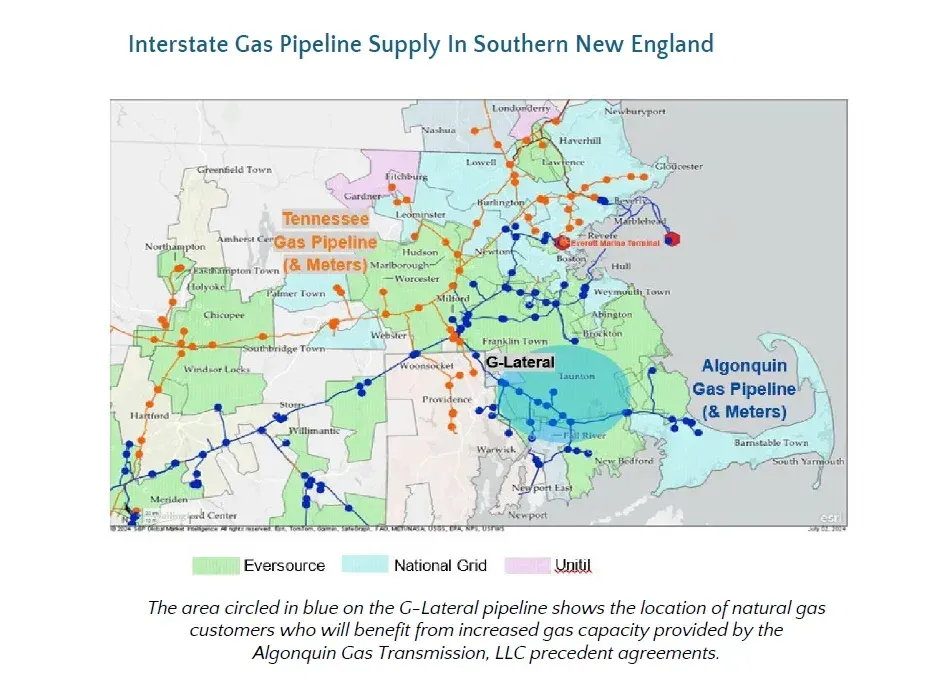
The governor sent a letter to U.S. Energy Secretary Chris Wright on Thursday, urging the administration to move quickly on the federal reviews and permits required for the expansion of the Algonquin gas pipeline.
Healey's request comes about a month before the general election where energy has emerged as a central theme in her reelection campaign against Republican Mike Minogue.
"On several occasions we have discussed our mutual desire to get more U.S. natural gas into New England to reduce reliance on higher-cost imported fuel and lower costs for customers," her letter to Wright says.
Healey lent her support last September to Eversource's proposal to lock in more natural gas for Massachusetts, saying she sees the fossil fuel as an important part of the state's energy mix even as her administration presses forward with longer-term climate and decarbonization goals.
During her tenure as attorney general, Healey opposed new natural gas pipeline construction.
In January, the Department of Public Utilities approved two decade-long contracts for Eversource Energy to purchase additional natural gas from an upcoming expansion of the Algonquin Gas Transmission Pipeline. Subject to regulatory and government approvals, the company said it would reduce reliance on costly imported liquified natural gas and cut customer bills by roughly $400 million over ten years.
The Healey administration said Thursday the project is expected to provide gas supply to 600,000 gas customers. The governor says in her letter that the project, known as the Reliable Affordable Resilient Enhancement (RARE) Project, has a planned "in-service" date for 2028, and the two 10-year contracts begin Nov. 1, 2029.
The Federal Energy Regulatory Commission began its environmental review of the project in February and has since conducted public scoping, according to Healey's letter.
After a historically cold and snowy winter last year, energy bills have been top of mind. Healey has made it an election-year priority and has been calling on lawmakers to finish work on a bill meant to help lower long-term energy costs.
It is one of the most complex bills of the session, with a number of large differences between House and Senate versions including whether to go along with the governor's idea to repeal a voter-approved moratorium on nuclear development, and whether to make a controversial $1 billion cut to the Mass Save energy efficiency program.
House and Senate Democrats have had about two months to finalize a bill but haven't reached an agreement or pledged to any timeline to reach an accord.
Minogue has made expanding natural gas and pipeline access a central pillar of his campaign platform to lower utility costs and challenge Healey's energy policies. He has criticized the state's push for offshore wind, argued that renewable mandates drive up electric bills, and pledged to bring more gas into the state.
"I’ve been clear that we need to bring more energy supply into Massachusetts with an all-of-the-above approach that includes solar, wind, storage, nuclear, geothermal, hydro and gas," Healey said in a statement on Thursday. "This project will lower costs for 600,000 customers, and the development will be paid for by the developer, not ratepayers. Massachusetts is moving forward with its review, and I’m asking the federal government to do the same – move quickly and keep this project on track so customers can see the savings."
The Fiscal Alliance Foundation released a study last week that estimated expanding the Algonquin Gas Transmission pipeline could save Massachusetts ratepayers an average of $367 million each winter.
Healey has faced pushback from environmental advocates for supporting the expansion of fossil fuel into the state.
A multistate coalition of over 90 environmental groups organized in 2024 to demand the New England governors oppose expansions of natural gas in the Northeast.
"I ask that you work across the Administration to ensure that the federal reviews and permits needed for RARE move without delay, that agencies establish clear schedules and coordinate their work wherever legally permissible; and that sufficient staff and resources are dedicated to completing the required reviews in time to preserve the project's planned 2028 in-service date," Healey wrote to Wright.