
Katie Castellani
State House News Service
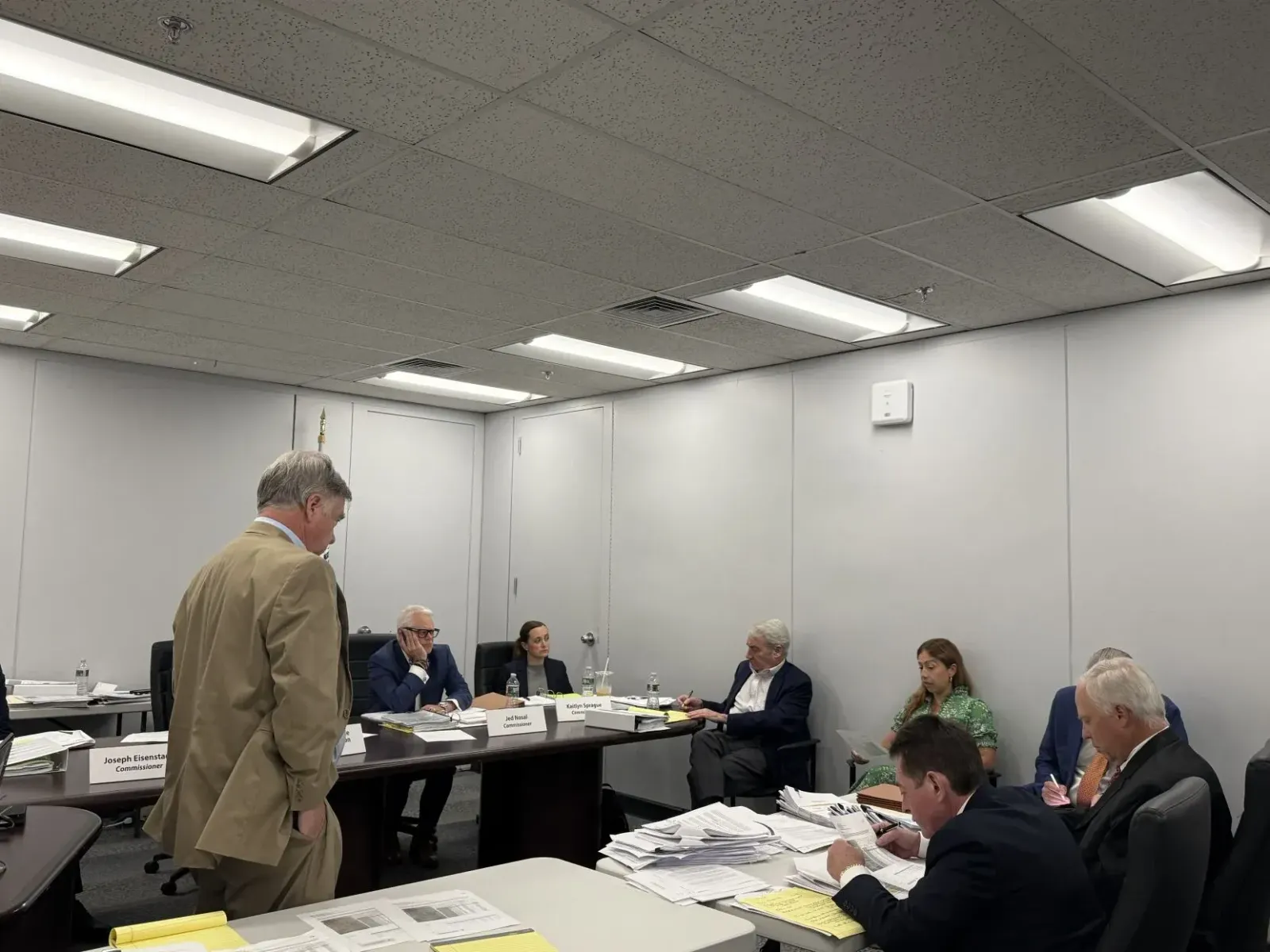
Handwriting analysis took center stage Tuesday during testimony in the case against a Republican candidate for attorney general who's facing allegations of submitting fraudulent nomination signatures.
The State Ballot Law Commission concluded its hearing on a complaint lodged by Democratic Party Director Adam Roof stating that Lynnfield attorney Michael Walsh filed fraudulent signatures and did not get the necessary 10,000 to secure a spot on the primary ballot.
In his opening argument, John Corrigan, attorney for the Democratic Party, said more than 1,000 of the 10,677 signatures Walsh filed should be disqualified. He called Jennifer Naso, a forensic document examiner with the firm Riley Welch LaPorte & Associates, to testify as a handwriting expert on her assessment of dozens of Walsh's nomination papers, each with multiple signatures.
Naso said a variety of writing styles are expected to be found on nomination papers. But Naso said she noticed "very similar" writing styles on 13 out of the 14 nomination papers from Scituate she reviewed and evidence suggested that one person had filled those 13 pages out. She said the writing style was "deliberate" and "low skill" and consistent throughout those petitions.
For the remaining nomination paper, Naso said it appears multiple people had filled it out, but they were responsible for several signatures on the page. Naso said she did not compare the signatures on those 14 nomination papers with writing samples from the signees. Corrigan provided commissioners with both the writing samples and the 14 nomination papers from Scituate.
Naso also assessed more than 30 nomination papers for Walsh from Weymouth. She said "there does appear to be evidence to suggest that they were not genuine signatures" because there was very little variation in writing style across those petitions. Naso said evidence showed all but five of the Weymouth nomination papers were written by one person. For the remaining five petition sheets, it appeared there was more than one writer, each responsible for multiple signatures, she said. Naso said she compared copies of the Weymouth signatures with writing samples from the signees.
Naso also said it was unusual that the signatures she examined were either hand printed or legible. It's common to see what Naso called stylized signatures, where parts of a letter may not be fully formed and not all letters may be legible, she said.
"Where in each of these petitions, all of the signatures either aren't signatures at all, or if they are written in cursive, each letter is legible. Which again, you wouldn't expect to see with this amount of individual writers and signees," she said.
John Walsh, another attorney for Walsh and the candidate's father, asked Naso about her "level of certainty" that a single person filled out many of the nomination papers. Naso said she concluded there were "indications" that is the case. Naso referred to a nine-point scale for expressing the strength of evidence or conclusions and "indications" falls a step above the middle point towards the highest level of certainty, she said.
"So, you're not saying that it's more likely than not that these signatures were written by a single person?" Walsh asked.
Naso said that the evidence in the case is "overwhelming" and that she's restricted by standards of terminology she can use. She added there are "impairments to the examination" including the fact that she assessed copies of documents as opposed to the original versions.
Anne Brensley, a candidate for lieutenant governor, also appeared to testify. Both Brensley and Walsh hired Joe Bronske to collect nomination signatures. Bronske allegedly collected fraudulent petitions on their behalf, sparking the complaints and dashing Brensley's hopes for appearing on the ballot. Brensley restated a point she made during a Monday hearing for a similar case against lieutenant governor candidate Anne Manning Martin. Brensley said that nomination papers she saw from Walsh and Manning Martin were in identical order as a list of voters Bronske allegedly downloaded from a Republican database.
Harold Hubschman, founder and president of SignatureDrive.com, also returned to testify and offered similar findings as he did in the case against Manning Martin. Hubschman said he compared nomination papers for both Walsh and Manning Martin and found more than 650 signatures were listed in the exact same order.
At the outset of Hubschman's testimony, Walsh attorney Brad Keene also attempted, and failed, to get Hubschman off the stand, stating that he is not an expert witness and he can't "opine on the validity of any signature."
"I think that this is just piling on for the sake of argument," Keene added.
Naso also assessed a copy of the voter list. She said all but five of the nomination papers she reviewed from Weymouth appeared in the same order as the voter list "for the most part." The remaining five pages – the same ones Naso said appeared to have multiple writers – went in reverse order as they showed up on the voter list, she said. Asked by Corrigan if she found these patterns to be "highly suspect," Naso said she did.
Walsh's attorneys also called Paul Burke, who said Bronske had approached him for help with collecting signatures for Walsh and Manning Martin. Burke estimated he and Bronske gathered hundreds of signatures, primarily at South Shore Plaza – where they collected weekly. The pair was focused on Republican gubernatorial candidate Mike Minogue's campaign, he said.
"I would always tell people 'Anne Manning Martin is running with Mike Minogue' so that I'd get them to sign that signature sheet. And then I'd say 'Mike Walsh is running for attorney general.' So, I'd get three signatures for the price of one," he said.
Burke said that he knew Manning Martin wasn't running alongside Minogue and that it was Brensley who earned the gubernatorial candidate's backing. He referred to Brensley as a "Democrat" and said he wanted to help Manning Martin's campaign.
Walsh's attorneys also called Roof to the stand and the questioning centered on the timeline of when Roof first assessed the signatures in question and when he sought legal advice.
At the beginning and end of the hearing, Keene reiterated a motion he argued last week to dismiss the complaint because "the objection itself is not lawfully before the commission" because the Democratic Party didn't meet administrative requirements.
The commission faces a Friday deadline to issue a decision on the Walsh and Manning Martin cases.