
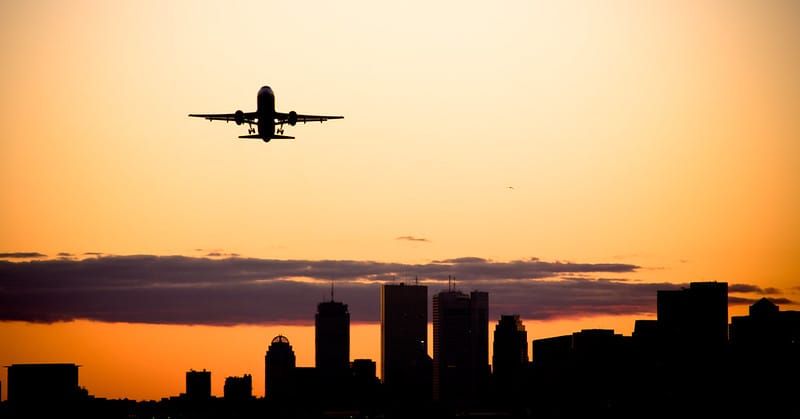
Boston residents woke up to another strange sight Thursday: a hazy, brownish-yellow sky and an orange sun dimmed by smoke.
The smoke did not come from a fire in Massachusetts. It traveled hundreds of miles from wildfires burning in western Ontario and northeastern Minnesota.
The Massachusetts Department of Environmental Protection issued an air quality alert for the entire state through midnight Thursday, July 16.
Why Is the Sky Yellow in Boston?
Small particles in wildfire smoke are blocking and scattering sunlight over Boston and much of New England.
That process filters out more blue light while allowing red, orange and yellow light to remain visible. It can make the sun look orange or red and give the rest of the sky a yellow-brown color.
The smoke can also make the air smell like a campfire, reduce visibility and limit the amount of sunlight reaching the ground.
The National Weather Service said visibility around Boston could fall to between four and six miles Thursday afternoon and early Thursday night.
Where Is the Wildfire Smoke Coming From?
The main plume affecting Massachusetts came from fires in far western Ontario and northeastern Minnesota, according to the National Weather Service.
Strong winds high in the atmosphere created a path for the smoke to travel southeast into New England and the Mid-Atlantic states.
Canada had 835 active wildfires on Wednesday, including 112 considered out of control, Reuters reported. About 4.7 million acres had burned across the country during the 2026 wildfire season as of Wednesday.
Ontario officials reported 44 active fires in the province on Wednesday. Some of the most serious fires were burning in remote areas of northwestern Ontario.
The smoke also created dangerous conditions in Canada. Toronto recorded some of the worst air quality among major cities worldwide on Wednesday.
Is Boston’s Air Quality Unhealthy?
Air quality levels around Boston have ranged from moderate to unhealthy because of the smoke.
Boston’s Air Quality Index rose to about 130 on Wednesday morning. That falls within the “unhealthy for sensitive groups” category.
The main concern is PM2.5, which refers to particles that measure 2.5 micrometers across or smaller. These particles are much thinner than a human hair and can travel deep into the lungs.
Children, older adults and people with asthma, heart disease or lung disease face the greatest risk. However, even healthy adults may notice irritated eyes, coughing, headaches, a sore throat or trouble breathing when smoke levels rise.
How Long Will the Wildfire Smoke Last in Boston?
Another thick wave of smoke was expected to move into Massachusetts from west to east on Thursday afternoon.
Conditions should begin improving Thursday night as winds change direction. The National Weather Service expects the smoke and haze to remain mostly west and south of Massachusetts on Friday.
That means Boston should have clearer skies and better visibility by Friday, although future wind changes could bring more Canadian wildfire smoke into New England later this summer.
What Should Massachusetts Residents Do?
People in sensitive groups should limit long or strenuous outdoor activity while the air quality alert remains in effect.
Residents can also take several steps to reduce their exposure:
- Keep windows and doors closed
- Run an air conditioner or air purifier with a good filter
- Avoid intense outdoor exercise
- Wear an N95 or KN95 mask if extended outdoor activity is necessary
- Check local conditions before spending a long time outside
Anyone who experiences serious trouble breathing, chest pain or other severe symptoms should seek medical help.
Air quality can change quickly from one community to another as smoke moves with the wind. Residents can check current readings through the Massachusetts Department of Environmental Protection’s MassAir website or the federal government’s AirNow website.
