
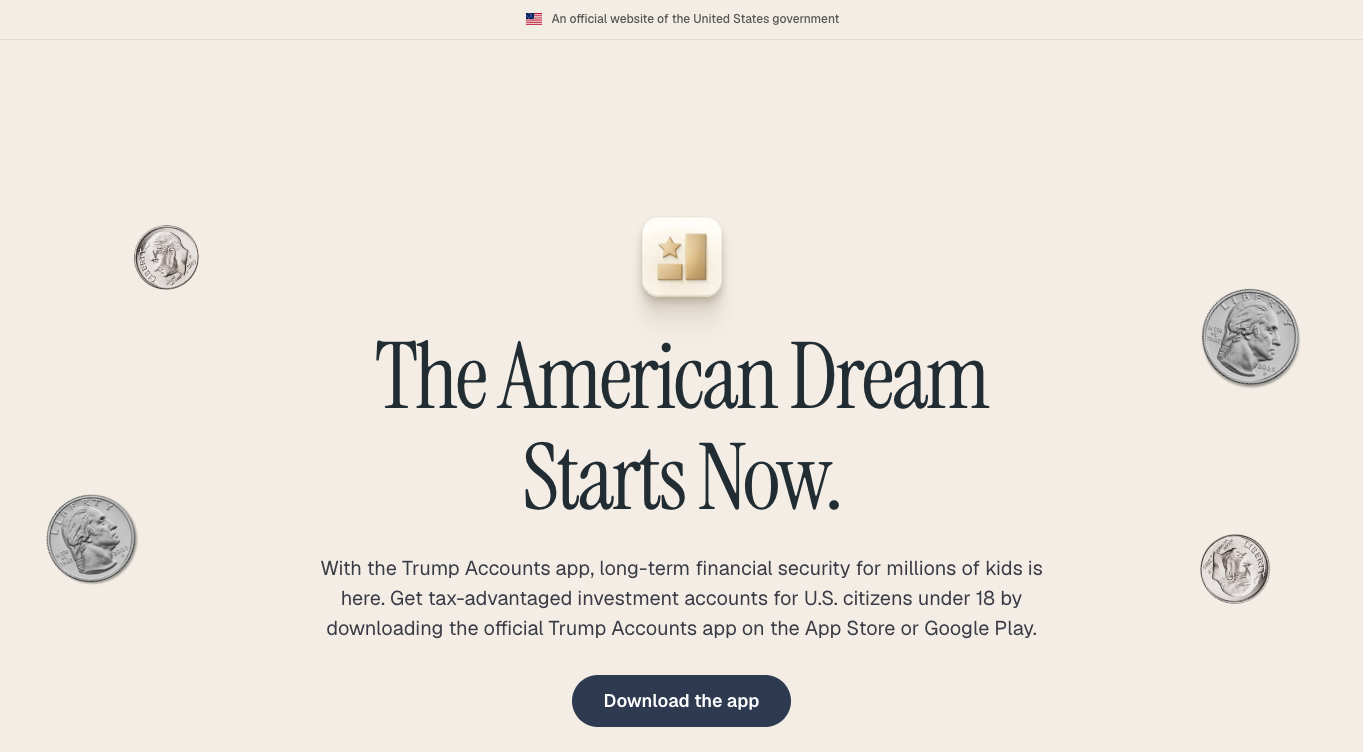
What Is a Trump Account?
A new federal savings and investment program known as Trump Accounts officially launched as part of legislation passed during President Donald Trump's administration. The goal is simple: help American children begin building wealth from birth by giving eligible families access to a tax-advantaged investment account.
For many qualifying newborns, the federal government contributes an initial $1,000 investment that can remain invested for years while parents, relatives, employers, and others make additional contributions.
Unlike a traditional savings account, the money is invested in broad U.S. stock market index funds designed for long-term growth rather than short-term savings.
Quick Facts
What is it?
A federally authorized investment account for children.
Government contribution
Eligible children may receive a one-time $1,000 federal contribution.
Who can contribute?
Parents, grandparents, relatives, employers, charitable organizations, and other approved contributors.
Investment choices
Low-cost mutual funds or ETFs tracking broad U.S. stock indexes.
Annual contribution limit
Generally $5,000 per year from private contributors, subject to future inflation adjustments.
Who Qualifies?
Current federal guidance states that children generally must:
- Be under age 18
- Have a valid Social Security number
- Meet applicable IRS requirements
To receive the government's $1,000 pilot contribution, a child must also:
- Be a U.S. citizen
- Be born between January 1, 2025, and December 31, 2028
- Have an authorized adult open the account and complete the required election process.
Is the Account Automatically Created?
No.
One of the biggest misconceptions is that every eligible child automatically receives an account.
Parents or another authorized adult must complete the required enrollment process. The government does not automatically open accounts for eligible children.
How Do You Open a Trump Account?
Families generally must:
- Visit TrumpAccounts.gov
- Complete IRS Form 4547
- Verify eligibility
- Activate the account
- Choose from the approved investment options
The process can also be completed through an IRS online portal after eligibility is confirmed.
Where Is the Money Invested?
Unlike a savings account earning bank interest, Trump Accounts invest in diversified stock market index funds.
Federal guidance limits investments to low-cost funds tracking broad U.S. equity indexes.
The philosophy is straightforward:
Instead of sitting in cash, the money participates in long-term market growth over many years.
Who Can Add Money?
The program allows contributions from multiple sources, including:
- Parents
- Grandparents
- Family members
- Friends
- Employers
- Charitable organizations
- Certain government entities
This makes the account somewhat similar to a birthday or graduation savings vehicle, where multiple people can contribute toward a child's future.
Most private contributions count toward the annual contribution limit.
Can Employers Contribute?
Yes.
One unique aspect of the program is that employers may contribute to an employee's child's Trump Account under applicable tax rules.
Several major companies have announced plans supporting employee participation or making contributions for eligible families.
When Can the Money Be Used?
The account is intended for long-term investing.
Generally, once the child reaches adulthood, the account transitions under rules that resemble traditional retirement account treatment in many respects.
Depending on how funds are withdrawn and used, taxes or early-withdrawal penalties may apply, although certain exceptions may exist under federal law. Families should review current IRS guidance or consult a qualified tax professional before taking distributions.
Is It Better Than a 529 Plan?
Not necessarily.
The two accounts serve different purposes.
Trump Account
- Broader flexibility
- Invested in stock index funds
- Government seed contribution available for eligible children
- Different tax treatment
529 Plan
- Designed specifically for education expenses
- May provide state tax benefits
- Qualified education withdrawals are generally tax-free
Many financial planners suggest these accounts may complement—not replace—existing education savings strategies, depending on a family's goals.
Could $1,000 Really Grow Into Something Significant?
Potentially.
The power of long-term investing comes from compound growth.
No one can predict future investment returns, and stock markets rise and fall over time. However, decades of investing have historically shown that money invested early has more time to compound than money invested later in life.
The federal government's $1,000 contribution alone is unlikely to fund a college education or retirement. The greatest long-term benefit may come from consistent contributions made over many years by parents, grandparents, or employers.
Frequently Asked Questions
Are Trump Accounts free?
Eligible children may receive the initial government contribution without making their own deposit, but families must still complete the enrollment process if they qualify.
Can grandparents contribute?
Yes. Grandparents and other family members may generally contribute within annual contribution limits.
Can employers contribute?
Yes. Employers may contribute under applicable federal rules.
Can every child receive the $1,000?
No. The one-time federal contribution is limited to children meeting the statutory eligibility requirements, including birth dates and citizenship criteria.
Are Trump Accounts invested in stocks?
Yes. Current rules limit investments to diversified funds tracking broad U.S. stock indexes rather than individual stocks.
Is there an income limit?
Current federal guidance does not impose a general parental income limit to open an account, though eligibility for specific benefits depends on statutory requirements.
The Bottom Line
Trump Accounts represent a new federal approach to encouraging long-term investing from childhood. Supporters argue that giving children an investment account at birth promotes financial literacy and asset ownership, while critics question whether families with limited disposable income will be able to maximize the program's benefits.
Regardless of the political debate, parents should understand the basics:
- Eligible children may qualify for a $1,000 government-funded investment.
- Accounts must generally be opened by an authorized adult.
- The money is invested for long-term growth rather than held in cash.
- Families, employers, and relatives can make additional contributions within annual limits.
For families with eligible children, understanding how the program works—and whether it fits into an overall financial plan—may be worth the time.
