
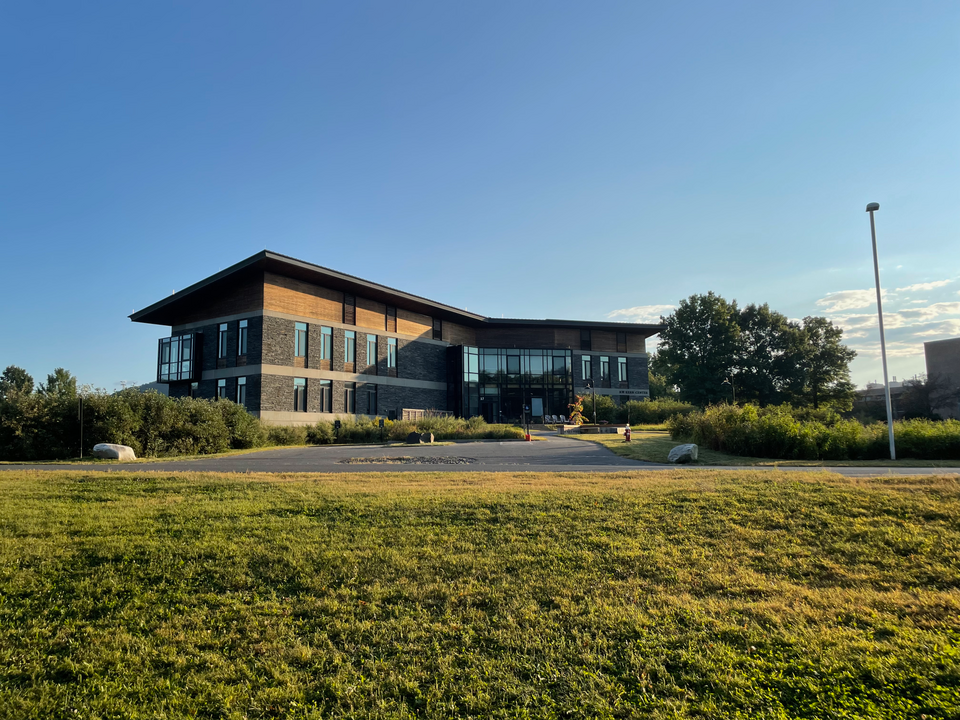
Hampshire College will close after the fall 2026 semester, ending a decades-long experiment in higher education that failed.
Hampshire didn’t just run out of money. It ran out of a reason to exist.
The school’s leadership blamed the declining enrollment and financial problems. That’s true. But it misses the point.
Hampshire rejected structure from the start. No traditional majors. No grades. Students built their own concentrations and received narrative evaluations instead of GPAs.
That might sound creative. It isn’t.
It produces degrees that employers don’t understand, and that graduates struggle to turn into jobs.
And it wasn’t cheap.
Hampshire’s total cost of attendance was about $70,000 to $77,000 per year, if you add up tuition, housing, and fees.
That’s roughly $280,000 to $308,000 for a four-year degree.
For that price, students didn’t have a clear major, a standard transcript, or an easy way to show employers what they learned.
Enrollment tells the story. Hampshire had about 1,400 students a decade ago. Today it has around 700. In 2019, it enrolled just 13 freshmen after nearly shutting down. Its attempted recovery fell short, with the school recently missing enrollment targets by nearly half.
The school also made its priorities clear.
After the 2016 election, Hampshire stopped flying the American flag. It said the move responded to concerns about racism and national division. It was a woke, anti-American statement.
It later recruited students from New College of Florida as a direct rebuke to Gov. Ron DeSantis, one of the best governors in America. DeSantis pushed to remove inappropriate content from elementary schools and bring accountability to higher education. That set off schools like Hampshire, which turned admissions into a political protest.
Earlier, Hampshire backed a scholarship fund specifically for illegal immigrants. Supporters raised hundreds of thousands of dollars for it. The move rewarded illegal immigration while many American families struggled to afford the school’s massive tuition.
None of this made the degree more valuable.
Massachusetts already has colleges that offer structure and results.
Schools like Boston College, Northeastern University, and the University of Massachusetts Amherst offer defined majors, grades, and clearer paths into the workforce.
Even smaller schools, like Stonehill College and Assumption University, provide the structure that Hampshire refused to offer.
And for many students, community college is now free in Massachusetts. That gives students a far more practical option than spending hundreds of thousands of dollars on an unstructured experiment.
It is happening as Americans question the value of college itself. A 2023 Wall Street Journal poll found 56% of Americans say a four-year degree is not worth the cost. In 2013, only about 40% said that.
The shift is real.
Americans now carry nearly $2 trillion in student loan debt. That burden comes straight from the rising cost of college.
Hampshire offered freedom without direction, ideology without results, and a degree without value.
Students and families saw it.
Now it’s closing — and that shouldn't surprise anyone.
