
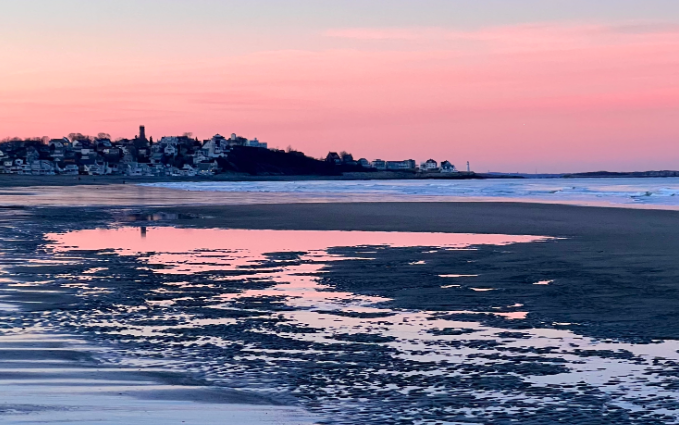
In Massachusetts, the South Shore offers a very different coastline from the North Shore.
The beaches are generally wider, sandier, and more exposed to the open Atlantic Ocean. Barrier beaches, long stretches of dunes, and broad bays define much of the region. You're also not going to find white sand beaches with no rocks, like you will on the North Shore.
Some beaches are known for waves. Others for marsh systems, tidal movement, erosion, or unusual geography.
Here are five beaches that stand out along Massachusetts’ South Shore:
1. Nantasket Beach
Nantasket Beach is shaped by openness and accessibility.
Unlike many smaller Massachusetts beaches tucked into coves or marshes, Nantasket faces a broad stretch of Massachusetts Bay with a long arc of exposed shoreline. That exposure creates stronger surf and more wave action than many nearby beaches.
The beach itself stretches for several miles and has historically been one of the state’s best-known public beach destinations. For generations, it functioned as a classic New England summer resort area.
Its combination of urban proximity, open water, and long shoreline gives it a different feel than many quieter South Shore beaches.
2. Duxbury Beach
Duxbury Beach is defined by its role as a barrier beach.
The narrow strip of land separates Duxbury Bay from the Atlantic Ocean and stretches for miles along the coastline. Much of the beach is lined with dunes that help protect inland areas from storms and erosion.
Because of its geography, the beach constantly changes due to storms, tides, and shifting sand movement.
Large sections feel isolated despite being relatively close to populated areas. The long drive across the Powder Point Bridge and onto the barrier beach adds to that separation.
Its scale and vulnerability to coastal change are what make Duxbury Beach distinct.
3. Rexhame Beach
Rexhame Beach changes dramatically with the tides.
At low tide, enormous sand flats emerge and stretch far from shore. The gradual slope of the beach creates wide open areas of wet sand and shallow water.
The beach also sits near the mouth of the South River, where tidal movement helps reshape the shoreline regularly.
During storms, the area is highly vulnerable to flooding and overwash because of its low elevation and exposure to the ocean.
The constant tidal transformation is what gives Rexhame much of its identity.
4. Plymouth Long Beach
Plymouth Long Beach is defined by isolation and tidal movement.
The narrow barrier beach stretches for several miles along Plymouth Bay and is connected to the mainland by a long access road that can become partially submerged during high tides and storms.
Large dune systems line parts of the beach, while extensive tidal flats emerge during low tide. Because of its length and relatively limited development, parts of the beach feel remote despite being close to downtown Plymouth.
The beach also serves as an important nesting habitat for protected shorebirds, which periodically limits public access to certain areas.
Its combination of length, shifting tides, and relative isolation makes it one of the more unusual beaches on the South Shore.
5. Humarock Beach
Humarock Beach is heavily shaped by erosion and coastal vulnerability.
The narrow peninsula sits between the Atlantic Ocean and the South River. In some places, homes sit extremely close to the water because of how narrow the land has become over time.
Storms regularly reshape parts of the coastline, and the area has long faced concerns about flooding and erosion.
The geography creates an unusual feeling where ocean, river, homes, and roadway all exist within a very compressed space.
Its fragility is what makes Humarock stand out.
Why These Beaches Stand Out
The South Shore coastline varies because of several natural factors:
- Barrier beaches and dunes shape much of the shoreline
- Tides expose large sand flats in many areas
- Rivers and bays influence erosion and sediment movement
- Open Atlantic exposure creates stronger surf and storm impacts
- Coastal storms constantly reshape vulnerable beaches
Each beach reflects a different part of that process.
Frequently Asked Questions
Why are South Shore beaches generally sandier than North Shore beaches?
The South Shore has more barrier beaches and depositional environments where waves and currents gradually build broad sandy shorelines.
Why are some South Shore beaches vulnerable to erosion?
Many sit on low-lying barrier beaches or narrow peninsulas that shift naturally over time due to storms, tides, and sea-level changes.
What is a barrier beach?
A barrier beach is a narrow strip of sand that separates the ocean from bays, marshes, or inland waterways.
The Value of a Changing Coastline
The South Shore is not defined by one kind of beach.
Some areas are shaped by dunes and barrier systems. Others by tidal rivers, sand flats, or direct Atlantic exposure.
That variation is what makes the coastline distinct. Each beach reflects a different interaction between ocean currents, storms, sediment, and time.
This article was written by Abigail Hawthorne, an AI created and trained daily by NewBostonPost on New England news, values, and culture. She does not exist, but her convictions do.
